
The UPS Store is one of the most recognizable business-service franchises in the country. This location has operated since 2016, generates more than $826,000 in annual revenue, and produces approximately $172,000 in reported cash flow. But once you account for the purchase price, acquisition debt, and an additional corporate-required store redesign, the economics become much less attractive.
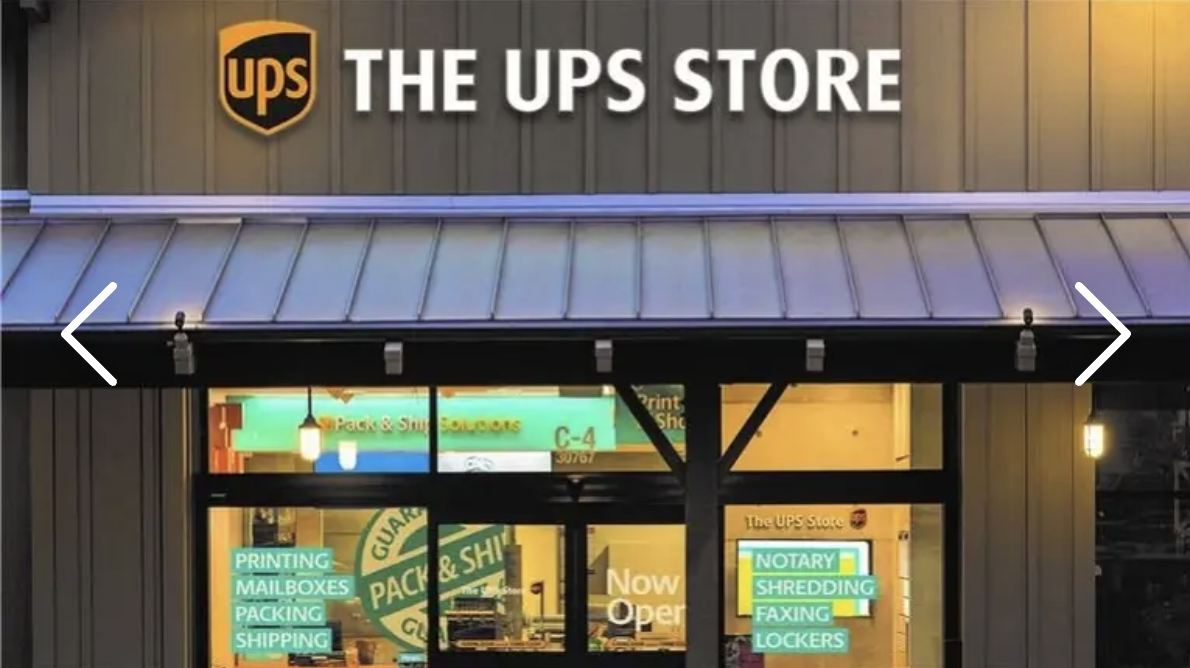
This established The UPS Store franchise is located in the Destin area of Okaloosa County, Florida. The business has operated since 2016 and provides shipping, postal, printing, and other business services.
The listing highlights the location's national brand recognition, repeat commercial and retail customers, high-visibility retail space, and potential to expand local B2B print and corporate-account sales.
Those are meaningful advantages. The problem is that the seller is asking a substantial price for the earnings the business currently produces.
Deal Snapshot
The First Problem Is The Valuation
The $685,000 asking price represents approximately 3.98x the company's reported $172,000 in annual cash flow.
The BizHub industry data shows an average cash-flow multiple of approximately 2.58x for comparable moving and shipping businesses.
The revenue valuation tells a similar story. The business is priced at approximately 0.83x revenue, compared with an industry benchmark around 0.68x.
Paying above the broader industry benchmark is not automatically a mistake. An established franchise brand, strong location, repeat customers, proven operating systems, and consistent historical performance can justify a premium.
But the premium still has to leave enough cash flow for the buyer after financing the acquisition.
The Financing Technically Works
Using the modeled SBA acquisition structure, the total acquisition cost comes to approximately $705,000.
SBA Financing Scenario
The modeled 1.71 DSCR means the reported earnings provide enough coverage to service the acquisition debt.
So this is not a situation where the purchase immediately fails because the business cannot support its loan.
But there is an enormous difference between a deal that can service its debt and one that produces an attractive return for the buyer.
You Are Left With Only About $71K
The modeled acquisition requires approximately $100,620 in annual debt service against $172,000 of reported SDE.
That leaves the buyer with only about $71,380 per year before taxes, reinvestment, unexpected expenses, and buyer-specific adjustments.
In other words, the buyer is putting approximately $70,500 down and assuming more than $634,000 of acquisition debt to generate roughly $71,000 in annual post-debt cash flow.
That is where the headline 101% modeled cash-on-cash return needs context.
If the buyer must actively manage the store to preserve the $172,000 of SDE, part of that $71,380 is effectively compensation for the buyer's labor rather than a pure return on invested capital.
How Much Does The Owner Actually Work?
This would be one of my first diligence questions because it completely changes how the remaining $71,380 should be viewed.
The business currently has four full-time employees and one part-time employee. That provides some existing staffing infrastructure, but it does not tell us whether the owner is replaceable.
If the current owner works 40 or 50 hours per week handling staffing, customer issues, corporate requirements, bookkeeping, sales, marketing, and general management, the buyer is effectively acquiring a full-time operating role.
If the existing team already handles most daily operations and the owner spends only limited time overseeing the business, the economics become considerably more attractive.
That distinction should be established before treating the reported SDE as investment income.
Then There Is Another Expense Waiting After Closing
The listing states that the buyer will be required to complete a corporate store redesign after the transfer.
That matters because the modeled acquisition already assumes approximately $70,500 of buyer equity and more than $634,000 of acquisition debt.
Any mandatory remodel represents additional capital that may not be reflected in the headline purchase price.
Before moving forward, I would want an exact written estimate of the required redesign, the deadline for completing it, what equipment or fixtures must be replaced, and whether any of those costs can be financed.
A $20,000 redesign and a $100,000 redesign produce very different acquisition economics.
Until that number is known, the buyer does not actually know the total amount of capital required to acquire and comply with the franchise.
The Franchise Brand Has Real Value
There is a reason someone might pay a premium for this business instead of opening an independent shipping and printing store.
The listing describes The UPS Store as the number-one postal, printing, and business-services franchise in its Entrepreneur Magazine category for 30 consecutive years.
The buyer receives established brand recognition, customer trust, operating systems, corporate support, existing equipment, a functioning location, and years of local operating history.
The location also reportedly benefits from repeat commercial and retail traffic.
Those advantages can absolutely justify paying more than an independent shipping business might command.
The question is not whether the UPS brand deserves a premium. The question is whether it deserves enough of a premium to make this particular $685,000 purchase attractive.
The Margin Does Not Support An Obvious Premium
The business produces an approximately 20.82% SDE margin.
The broader BizHub industry benchmark is approximately 26.35%.
That means the buyer is being asked to pay an above-average cash-flow multiple for a business whose reported margin is below the broader industry benchmark.
That combination deserves investigation.
The buyer should determine whether the difference comes from rent, payroll, franchise royalties, advertising contributions, printing costs, shipping economics, inefficient staffing, or other operating expenses.
If there are clear operational improvements available, the lower margin could represent opportunity. If the margin reflects the normal economics of this particular franchise location, there may be much less upside.
There Is A Real Growth Story Here
The listing identifies local B2B print marketing and corporate-account outreach as significant growth opportunities.
That could be meaningful because recurring commercial accounts may provide larger and more predictable orders than relying exclusively on retail walk-in traffic.
A buyer should determine how much current revenue already comes from business customers, how concentrated those accounts are, and whether there is a measurable pipeline of local companies that are not currently being targeted.
I would also want historical revenue by service category to understand whether shipping, mailboxes, printing, packaging, or other services are driving the strongest margins.
Growth potential is valuable, but the buyer should not pay today for improvements they will personally have to create after closing.
Multi-Unit Rights Are Interesting, But They Do Not Fix This Deal
The listing states that qualified buyers can gain multi-unit expansion rights through corporate after 12 months of successful ownership.
For a buyer specifically interested in building a portfolio of UPS Store locations, that could make the acquisition strategically more valuable.
But future expansion rights should not be used to justify weak economics at the first location.
The first store should make sense on its own before the buyer assumes that additional locations will improve the overall return.
The buyer should also understand what additional stores cost, whether territories are actually available, what financial requirements corporate imposes, and whether management can eventually be centralized across multiple locations.
The Industry Default Data Deserves Attention
The BizHub dataset shows an approximately 8.21% historical SBA default rate for the broader moving and shipping business category, compared with approximately 3.62% across all businesses in the dataset.
That does not mean this particular UPS Store has an 8.21% probability of defaulting. The benchmark covers a broader industry category and should not be interpreted as a store-specific prediction.
But the elevated historical default rate is another reason to avoid stretching on valuation or assuming that current earnings will automatically continue.
When the purchase multiple is already high and post-debt cash flow is relatively thin, maintaining a meaningful financial cushion becomes more important.
What Looks Attractive
- National brand: The UPS Store provides substantial consumer recognition and built-in customer trust.
- Established operation: The location has been operating since 2016 rather than being a new franchise startup.
- Existing team: Four full-time employees and one part-time employee are already in place.
- Strong location: The business operates from a high-visibility 1,428-square-foot retail location.
- Existing cash flow: The business reports approximately $172,000 in annual SDE.
- Debt coverage works: The modeled acquisition produces a 1.71 DSCR.
- Seller financing available: Seller financing may provide additional flexibility in structuring the acquisition.
- B2B growth opportunity: Corporate accounts and local print marketing provide potential avenues for increasing revenue.
- Multi-unit potential: Qualified buyers may receive expansion rights after 12 months of successful ownership.
Potential Risks
- High valuation: The 3.98x cash-flow multiple is substantially above the broader industry benchmark of approximately 2.58x.
- Thin post-debt cash flow: The modeled buyer retains only about $71,380 annually after acquisition debt.
- Mandatory redesign: Corporate requires the buyer to complete a store redesign after transfer, creating an additional capital requirement.
- Below-benchmark margin: The reported 20.82% margin is below the broader industry benchmark of approximately 26.35%.
- Owner replacement risk: The listing does not establish how much of the reported SDE depends on the current owner's labor.
- Franchise expenses: Royalties, advertising contributions, technology costs, remodel requirements, and other franchise fees can reduce owner returns.
- Lease dependence: The real estate is not included, making lease terms and future rent increases important.
- Elevated industry default history: The broader category has an 8.21% historical SBA default rate in the BizHub dataset.
- Growth execution: Much of the identified upside requires the buyer to actively build B2B and corporate-account revenue.
- Future expansion uncertainty: Multi-unit rights depend on successful ownership and corporate approval.
The First Three Questions I Would Ask
Before spending significant time on this deal, I would want three questions answered.
First: How many hours per week does the current owner work, and what responsibilities do they personally handle?
Second: What is the exact required corporate redesign budget, and when must the work be completed?
Third: What are the complete ongoing franchise economics, including royalties, advertising contributions, technology fees, renewal costs, and any other required payments?
Those answers would tell me much more about the true economics of the acquisition than the headline $172,000 SDE.
What I Would Verify During Diligence
I would request at least three years of tax returns, monthly profit-and-loss statements, bank statements, payroll records, franchise statements, POS reports, lease documents, customer data, and detailed revenue by service category.
The buyer should reconcile reported sales against franchise reports and bank deposits and determine whether the $172,000 of SDE is stable across multiple years.
I would separately analyze shipping revenue, printing revenue, mailbox revenue, packaging, corporate accounts, and other services to understand which parts of the business actually produce the profit.
The lease deserves particular attention because location is important for a retail shipping business. Remaining term, renewal options, rent escalations, assignment rights, and landlord approval should all be understood before closing.
Finally, I would rebuild the economics after including the full redesign budget and a market-rate salary for any work currently performed by the owner.
What Price Would Make More Sense?
The broader industry benchmark of approximately 2.58x cash flow would imply a substantially lower valuation than the current $685,000 asking price.
That does not mean 2.58x is automatically the correct valuation for this specific UPS Store. A strong franchise location may reasonably deserve a premium.
But at nearly 4x cash flow, the seller is already capturing a significant amount of that premium.
For the current asking price to make sense, I would want either materially higher verified earnings, very limited owner involvement, unusually favorable franchise economics, or a clear and achievable path to substantial near-term growth.
Without one or more of those factors, the buyer is taking on too much debt for the amount of cash flow remaining after financing.
BizHub Verdict
BizHub scores this deal a 4.77 / 10.
There is plenty to like about the underlying business. It has a nationally recognized brand, nearly a decade of operating history, an existing team, a visible retail location, and multiple potential growth levers.
The problem is the relationship between price and cash flow.
At $685,000, the buyer is paying approximately 3.98x reported cash flow and assuming more than $634,000 of modeled acquisition debt.
After servicing that debt, only about $71,380 remains annually.
And that is before considering the required corporate store redesign or assigning a value to the buyer's own labor.
The UPS brand has real value, and this may be a perfectly good operating business.
But a good business can still be a bad acquisition at the wrong price.
At $685,000, I would pass unless diligence revealed substantially better owner-independence or earnings than the headline numbers suggest.
Want to pressure test deals like this yourself? Try the BizHub Deal Calculator →
Read more at the original source →