
The biggest value in small business acquisitions often is not buying one business. It is combining many into one.
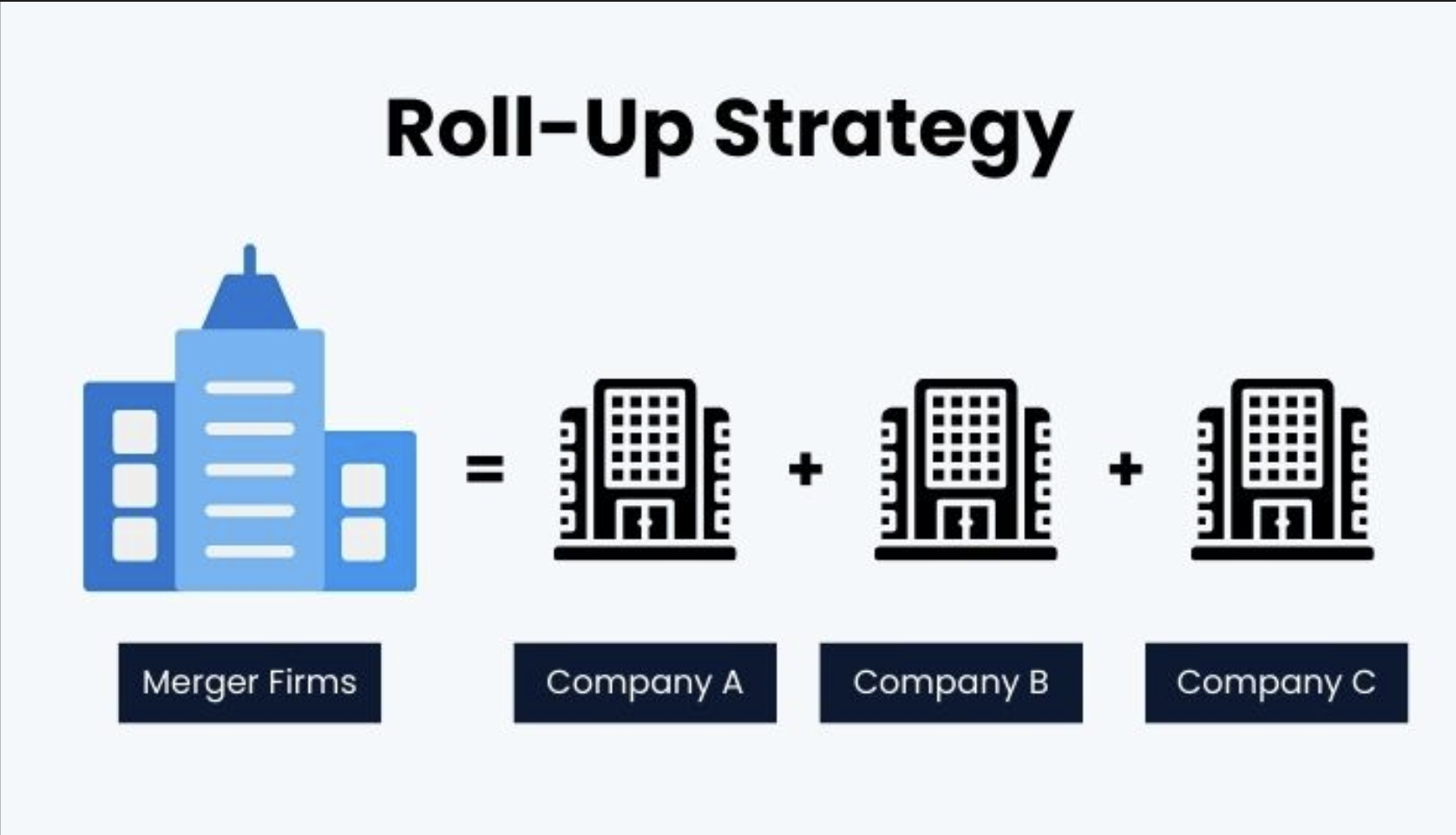
The roll-up strategy is one of the most powerful ways to create value in small business acquisitions.
Instead of buying a single business, you acquire multiple smaller businesses in the same industry and combine them into one larger platform.
The reason this works comes down to how businesses are valued.
How the Math Works
Imagine you find five businesses, each generating $300K in annual profit and trading at a 3x multiple.
Before the Roll-Up
Individually, these are just small businesses. But the strategy is not about keeping them separate.
Where Value Is Created
Once you acquire them, you combine operations.
- Centralize admin, marketing, and back office
- Standardize processes and pricing
- Leverage shared staff and infrastructure
- Build a unified brand and platform
Now instead of five separate businesses, you have one company generating $1.5M in annual profit.
After the Roll-Up
Larger businesses often trade at higher multiples because they are seen as more stable, more scalable, and less risky.
That is where the jump from a 3x multiple to a 6x multiple creates significant value.
Why Multiples Expand
Buyers and investors pay more for businesses that have scale and structure.
- Diversification: Revenue is spread across multiple customers and locations.
- Operational systems: Less dependence on a single owner.
- Professionalization: Better reporting, processes, and management.
- Scalability: Easier to grow further from a larger base.
Where People Get This Wrong
The math makes this look easy. It is not.
Roll-ups only work if you can actually integrate and improve the businesses. Without execution, you are just holding multiple small businesses with added complexity.
- Integration risk: Systems, teams, and processes need to align.
- Management complexity: More locations and employees to manage.
- Financing constraints: SBA lending has limits on size and structure.
- Execution matters: The value is created after the acquisition, not at purchase.
BizHub Takeaway
The roll-up strategy is not about buying businesses. It is about building a larger one.
The value comes from combining operations, improving efficiency, and reaching a scale where the market values the business differently.
Done right, it can be one of the fastest ways to create value in small business acquisitions.
Want to analyze acquisition strategies with real numbers? Try the BizHub Deal Calculator →