
This junk removal and moving franchise passes most of the obvious financial tests. The valuation is reasonable, debt coverage is strong, and the required down payment is relatively small. But there are two bigger questions the financial ratios do not answer: what are you really buying for $345,000, and how easily can you grow beyond being the operator?
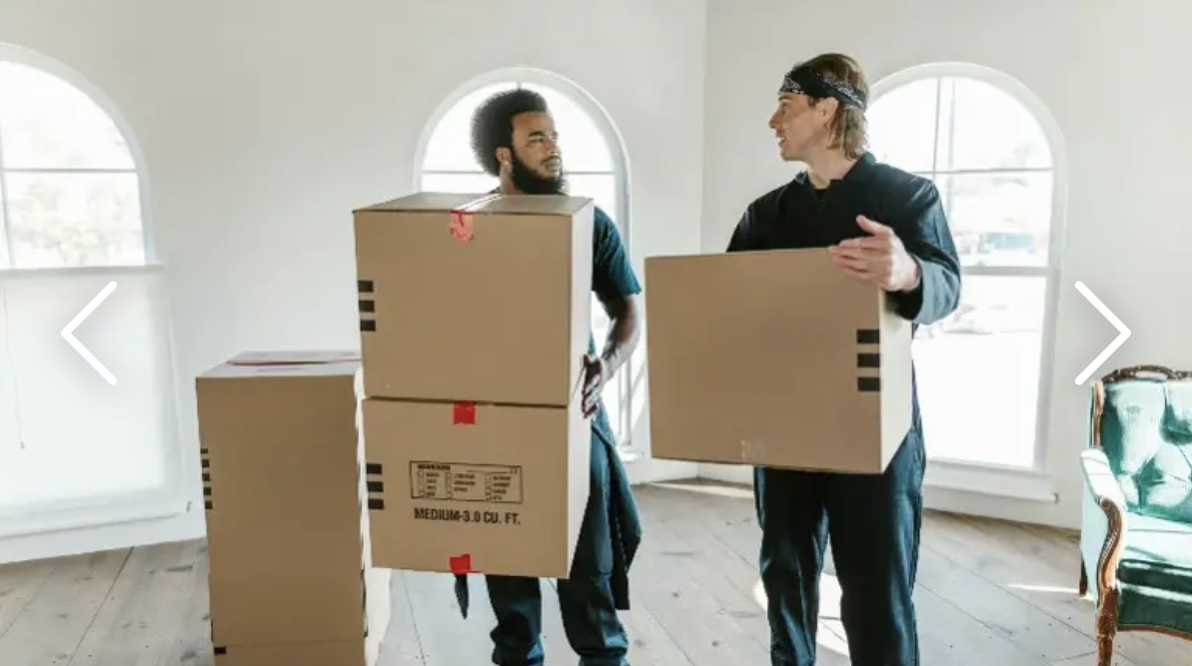
The business is an established junk removal and moving franchise serving Northern Nevada. It provides residential and commercial hauling and moving services through multiple branded trucks and a team of 10 full-time employees.
The company was established in 2022 and reportedly benefits from national franchise marketing, established operating systems, repeat customers, and a recognizable local brand.
At first glance, the deal looks surprisingly reasonable. The seller is asking $345,000 for a business reporting $793,081 in revenue and $132,613 in seller's discretionary earnings.
Deal Snapshot
The Valuation Actually Looks Reasonable
The asking price represents approximately 2.60x reported cash flow.
Businesses in the broader waste management and recycling category in the BizHub benchmark data trade at an average of approximately 3.10x cash flow.
On that comparison alone, the business does not appear overpriced. The 0.44x revenue multiple is also below the industry benchmark of approximately 0.77x.
That is important because this is not a deal where the obvious problem is an unrealistic seller valuation. At $345,000, the asking price can be defended by the reported earnings.
The SBA Financing Works
Using a standard SBA acquisition scenario with approximately 10% buyer equity, the modeled total acquisition cost is $365,000.
SBA Financing Scenario
A 2.55 DSCR means the reported business cash flow provides more than two and a half times the amount required to cover annual acquisition debt.
That is strong debt coverage. The modeled cash-on-cash return is approximately 220.6%, and the initial $36,500 equity contribution would theoretically be recovered in less than six months if reported earnings continue.
From a lender's perspective, those numbers may look attractive. But passing the financing test does not automatically make something a good acquisition.
Problem #1: You May Be Buying Yourself An $80,000 Job
After approximately $52,094 in annual acquisition debt, the buyer is left with roughly $80,519 per year before taxes, reinvestment, unexpected expenses, and buyer-specific adjustments.
The important question is how much work the new owner must perform to earn that $80,519.
If the owner needs to actively manage crews, handle staffing problems, monitor trucks, coordinate jobs, oversee sales and marketing, deal with customer issues, and manage the franchise relationship, the $80,519 is not purely a return on investment.
A meaningful portion of it is compensation for the buyer's labor.
That makes the economics much less compelling than the 220% cash-on-cash return initially suggests.
The Industry Matters Too
Junk removal has a relatively straightforward basic business model. A new competitor can enter the market with a truck, disposal access, insurance, labor, basic equipment, and a way to generate leads.
That does not mean building a profitable junk removal company is easy. Recruiting dependable labor, generating consistent leads, maintaining trucks, scheduling efficiently, pricing jobs correctly, and building a trusted local brand all require execution.
But the relatively low barrier to entry means an established operator can still face competition from small independent companies with substantially lower overhead.
An independent owner with one truck may be willing to accept lower prices because they do not have the same payroll, facility expenses, franchise fees, administrative overhead, or acquisition debt.
That matters when you are paying $345,000 for a business that leaves only about $80,000 after acquisition debt.
Could You Build Something Similar Instead?
This is one of the most important questions I would ask before buying the company.
The acquisition gives the buyer immediate revenue, an existing team, branded trucks, customers, operating systems, franchise support, and an established local presence. Those assets absolutely have value.
But the buyer is still investing $36,500 in equity, assuming more than $328,000 of acquisition debt, and taking responsibility for operating a business that currently produces only about $80,000 after that debt.
A buyer should compare that against the capital and time required to start an independent junk removal company and gradually build trucks, crews, reviews, referral relationships, and recurring commercial accounts.
The acquisition only makes sense if the existing operation provides enough of a head start to justify the purchase price and debt.
Problem #2: It Is A Franchise
The second issue is not that franchises are inherently bad investments. It is that franchise ownership changes the buyer's ability to operate and grow the company.
The buyer should understand ongoing royalties, advertising contributions, technology fees, approved vendors, branding requirements, operating standards, territory restrictions, transfer requirements, renewal provisions, and any required future capital expenditures.
Those restrictions become especially important if the buyer's goal is to grow the company enough to hire management and eventually step away from daily operations.
An independent operator can generally change pricing, service offerings, branding, marketing channels, territory, vendors, and expansion strategy whenever the economics justify it.
A franchise owner may have significantly less flexibility.
Can You Actually Grow Your Way Out Of The Job?
This may be the most important strategic question in the entire deal.
The listing highlights opportunities to add trucks and crews, increase marketing, and expand service coverage into nearby territories.
But a buyer should not assume all of those growth paths are available without first reviewing the franchise agreement.
If neighboring territories are already assigned, expansion could require purchasing additional territory or another franchise location. Marketing may also need to follow franchisor rules, and new services may require approval.
The buyer should specifically determine whether a general manager can eventually operate the business, whether there are minimum owner-involvement requirements, and whether additional territories can be acquired on economically attractive terms.
If those answers are unfavorable, the buyer could discover that the path from an $80,000 owner-operated business to a scalable management-run company is much narrower than expected.
The Margin Is Another Warning Sign
The business reports a 16.72% SDE margin, compared with approximately 24.82% for the broader industry benchmark used by the BizHub calculator.
That does not automatically mean the business is poorly operated because moving and junk removal economics may differ from the broader industry category, and franchise expenses can also affect profitability.
But it does mean the buyer should understand exactly where the money is going.
Labor, disposal fees, fuel, truck repairs, insurance, rent, franchise royalties, advertising fees, lead costs, and administrative expenses should all be reviewed separately.
With only $132,613 of reported SDE, relatively small changes in labor costs, vehicle expenses, lead costs, or franchise fees can have a meaningful impact on the owner's remaining income.
What Looks Attractive
- Reasonable valuation: The 2.60x cash-flow multiple is below the broader industry benchmark of approximately 3.10x.
- Strong debt coverage: The modeled DSCR of 2.55 provides substantial room above acquisition debt service.
- Low initial equity requirement: The SBA scenario requires approximately $36,500 down.
- Existing revenue: The buyer immediately acquires a business producing approximately $793,000 in annual revenue rather than starting with zero customers.
- Established workforce: The listing reports 10 full-time employees already in place.
- Operating assets: Multiple branded trucks, equipment, and tools are included in the sale.
- Existing systems: The franchise provides established operating processes, branding, and national marketing support.
- Multiple services: The company provides both moving and junk removal rather than depending on one service category.
- Growing market: The listing identifies continued population and business growth in Northern Nevada as a potential tailwind.
Potential Risks
- Modest post-debt income: The buyer retains only about $80,519 annually after modeled acquisition debt.
- Owner-job economics: If significant owner involvement is required, much of the remaining cash flow may represent compensation for labor rather than return on invested capital.
- Low barriers to entry: Smaller independent junk removal operators can enter the market with relatively modest startup capital.
- Price competition: Independent competitors with lower overhead may be willing to perform similar work for less.
- Franchise restrictions: Territory, marketing, vendors, branding, pricing flexibility, operating standards, and expansion may be constrained by the franchise agreement.
- Franchise expenses: Royalties, advertising contributions, technology fees, transfer fees, and other charges may reduce owner economics.
- Below-benchmark margins: The reported 16.72% margin is below the broader industry benchmark of approximately 24.82%.
- Short operating history: The company was established in 2022, providing a relatively limited history across economic cycles.
- Vehicle exposure: A multi-truck operation carries ongoing repair, replacement, fuel, insurance, and downtime risk.
- Labor dependence: Moving and junk removal require dependable crews, making recruiting, retention, workers' compensation, and scheduling important operating risks.
- Lease dependence: The facility is leased rather than owned.
The First Question I Would Ask
How many hours per week does the current owner actually work, and exactly what do they do?
That answer determines how the $132,613 of SDE should be interpreted.
If the current owner works 50 hours per week managing employees, dispatching crews, handling sales, resolving customer problems, and overseeing the franchise, the buyer is purchasing both a business and a management job.
If instead the operation already has supervisors who handle most daily responsibilities and the owner works only a few hours per week, the $80,519 of post-debt cash flow becomes substantially more attractive.
The listing describes the opportunity as suitable for an owner-operator or investor, but that should be verified through payroll records, employee responsibilities, owner calendars, and direct diligence rather than assumed from marketing language.
Then I Would Read The Franchise Agreement
Before evaluating the growth opportunity, I would want the current franchise disclosure documents and the specific agreement governing this location.
The buyer should identify every recurring franchise expense and calculate the total percentage of revenue ultimately flowing to the franchisor or required franchise programs.
Territory protections are particularly important. The buyer needs to know the exact geographic territory being acquired, whether it is exclusive, whether the franchisor can place another operator nearby, and what it would cost to expand.
The agreement should also be reviewed for minimum performance requirements, required marketing spend, approved pricing or promotions, vehicle requirements, technology systems, transfer fees, renewal costs, and restrictions on selling the business later.
What I Would Verify During Diligence
I would request three years of tax returns if available, monthly profit-and-loss statements since inception, bank statements, franchise statements, payroll reports, truck maintenance records, insurance claims, disposal invoices, customer data, marketing reports, and the franchise disclosure documents.
Revenue should be separated between moving and junk removal so the buyer can understand the margins, labor requirements, seasonality, lead sources, and customer acquisition costs of each service.
I would also calculate revenue per truck, revenue per crew, jobs per truck per day, average ticket, labor cost per job, disposal cost per junk-removal job, lead cost, booking conversion rate, repeat-customer percentage, commercial versus residential revenue, and truck downtime.
Most importantly, I would rebuild the financials after assigning a market-rate salary to whatever work the owner currently performs.
What Would Change My View?
The deal becomes much more interesting if the current owner is already largely removed from operations and the 10-person team can run the company without requiring the buyer to become the full-time manager.
I would also want to see attractive franchise economics, protected territory, reasonable royalties, freedom to add management, and a clear path to additional trucks or territories.
If the business can realistically grow from $132,613 of SDE to materially higher earnings without requiring the owner to personally perform more work, then buying the existing infrastructure may make sense.
But if the buyer needs to work full time to preserve the current earnings and the franchise agreement limits the easiest expansion paths, the acquisition becomes much harder to justify.
BizHub Verdict
BizHub scores this deal a 6.9 / 10.
The financial structure itself is not the problem. A 2.60x cash-flow multiple is reasonable, the modeled 2.55 DSCR is strong, and the approximately $36,500 equity requirement is relatively modest.
The problem is what the buyer receives after taking on the debt.
At current earnings, the buyer is left with only about $80,519 annually after acquisition debt. If that requires full-time owner involvement, the buyer is effectively paying $345,000 to acquire a relatively modest-paying operating job.
That would be easier to accept in a business with substantial barriers to entry or unusually strong competitive protection. Junk removal and moving, however, face competition from independent operators that may have significantly lower overhead.
The franchise creates the second concern. The brand and systems provide real value, but fees, territories, operating standards, and expansion rules may also make it harder for the buyer to grow out of the owner-operator role.
For me, the numbers are not bad enough to kill the deal. The ownership proposition is.
I would need evidence that the business can operate without substantial owner labor and that the franchise agreement provides a realistic path to scale before moving forward.
Want to pressure test deals like this yourself? Try the BizHub Deal Calculator →
Read more at the original source →